Block Paving Coventry
Block paving driveways, paths and patios from £180 per m². Hard-wearing, repairable, and laid on a base built for British weather.
We are DNA Driveways Coventry, the driveway and paving side of DNA Landscapes, and a Tobermore registered contractor. We lay block paving in any colour, size or pattern, from a plain drive to borders and inlays, and we bed our block paving on clean granite chippings rather than sharp sand.
Recent work
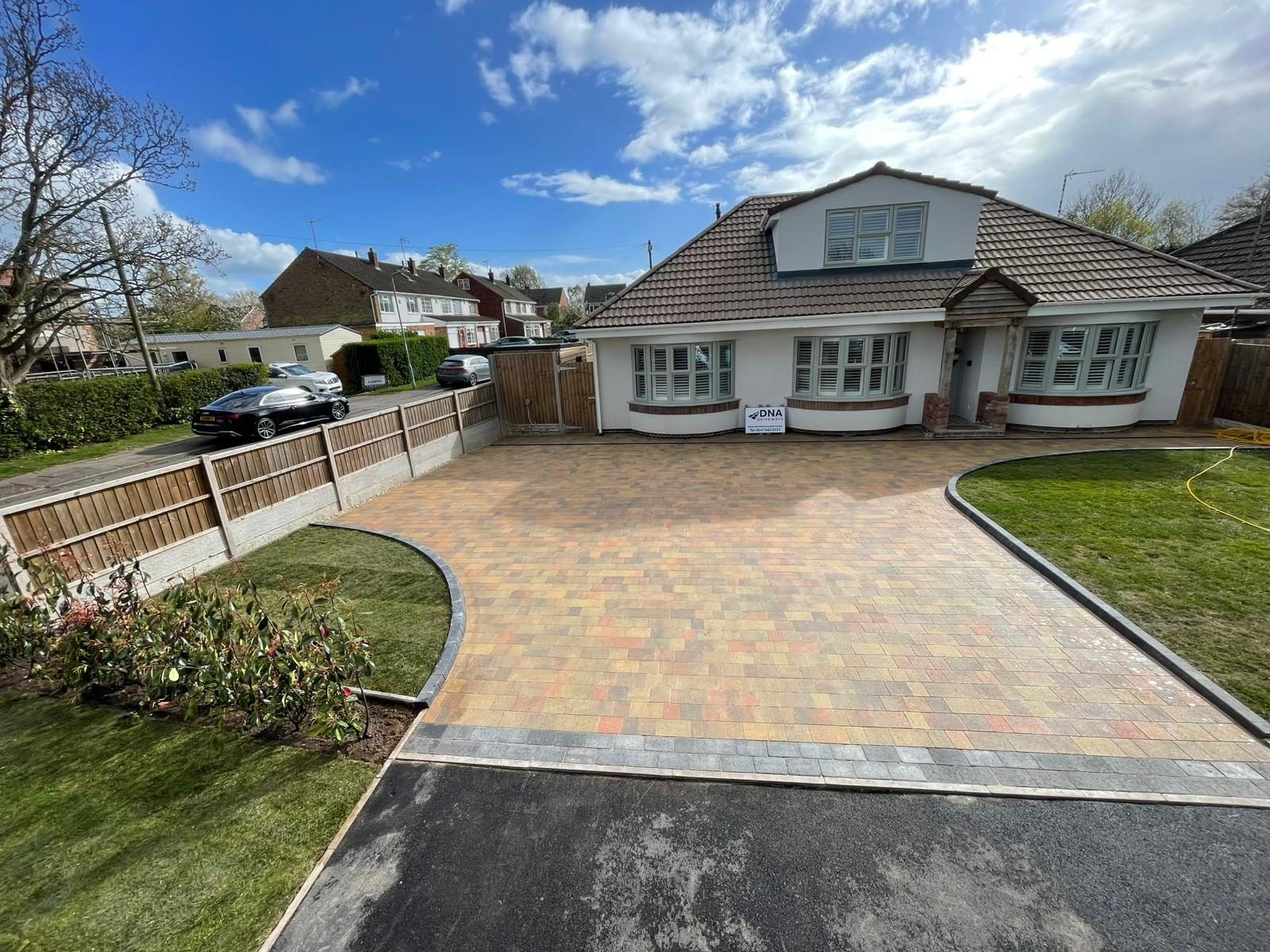
A block paving driveway in Binley Woods
Bradstone Rumbled block paving in charcoal, laid in mixed sizes across the frontage and down the side of the bungalow, with a brick-edged step to the front door. See the whole job, including the patio, on our Binley Woods page.
-
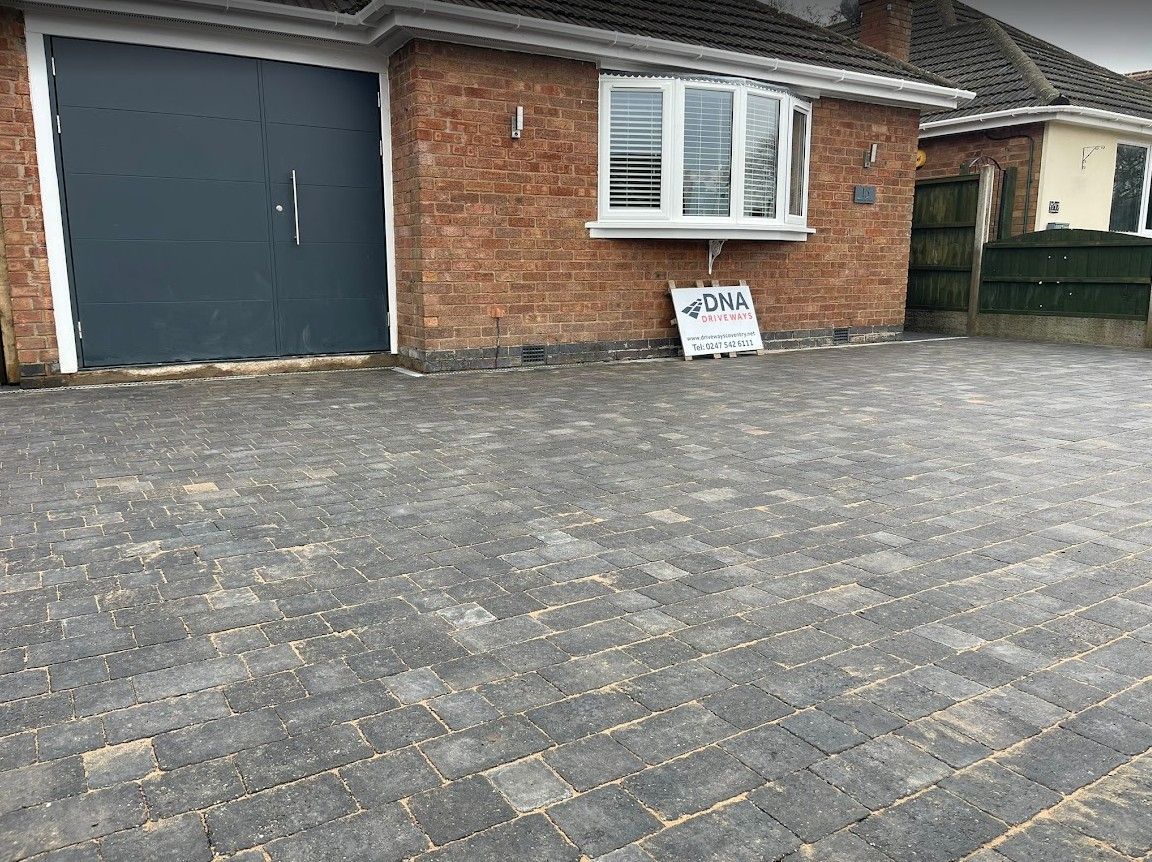
Bradstone Rumbled charcoal, mixed sizes -
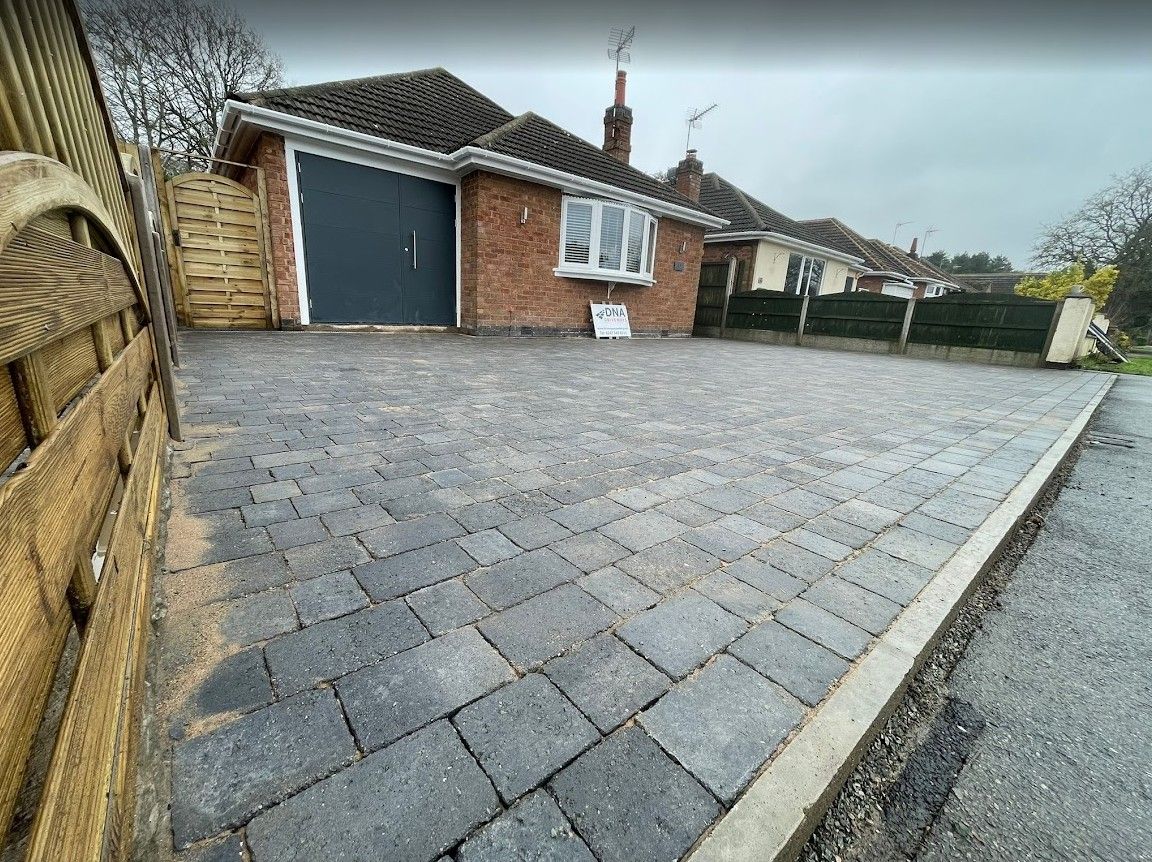
Laid to a kerb edge along the boundary -
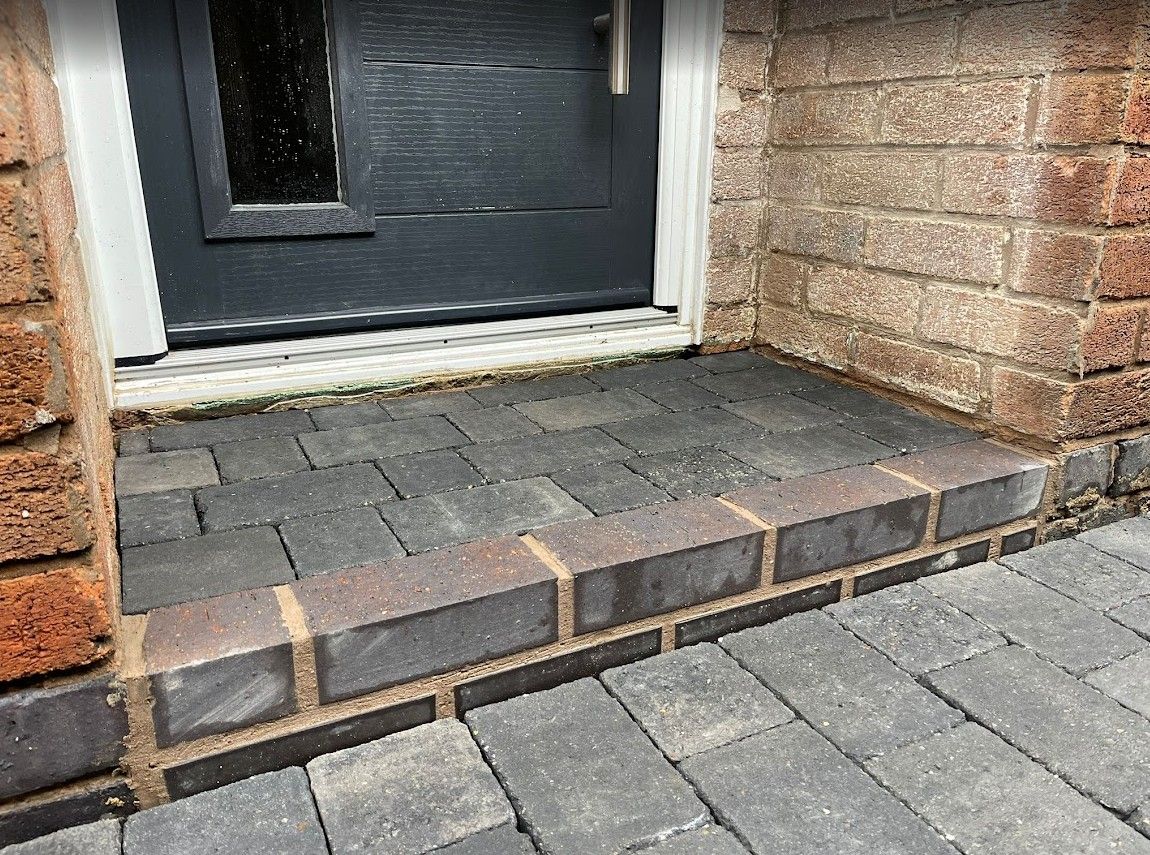
Brick-edged step to the front door
What goes underneath
Granite chippings, not sharp sand
Most block paving is bedded on sharp sand. We switched to clean 6mm granite chippings a few years ago, and in the video below Andy explains why on the Binley Woods job.
Works in the wet
Sharp sand turns dense and unworkable once it gets wet, so rain can stop a job for the day. Granite chippings can still be screeded in the rain, so the job keeps moving.
More porous
Granite chippings are a lot more porous than sharp sand, so the laying course drains more freely under the blocks.
Stays consistent
Sand changes its density between wet and dry. Chippings stay the same either way, so the bed behaves the same whatever the weather.
It is a slightly more expensive material, but losing fewer days to the weather more than makes up for it. Underneath the chippings sits a compacted crushed-stone sub-base, dug deeper where the ground or the vehicles call for it, and fixed edging holds the whole surface in place.
Patterns and borders
Choosing a block paving pattern

- Herringbone
- The strongest pattern for a driveway, because the blocks interlock in two directions and resist cars turning and braking.
- Stretcher bond
- Rows like brickwork. Clean and simple, and good for paths and patios.
- Basketweave
- Pairs of blocks laid at right angles, for a traditional look on lighter-use areas.
- Random
- Mixed sizes laid without a repeating pattern, like the Bradstone Rumbled drive above.
A contrasting border, like the charcoal edge on the drive at the top of this page, frames the drive and costs very little extra. Inlays such as diamonds or circles in a second colour are possible too, and we have laid words, numbers and even pet shapes. Just bear in mind that the next owner of the house may not share your love of the dog.
Choosing blocks
Not all block paving is equal
50mm concrete blocks
Right for most home driveways with everyday car use.
60–80mm blocks
For heavier vehicles or regular deliveries.
Clay pavers
A premium look that holds its colour better than concrete. Suits period homes.
Tumbled and textured
Rumbled or tegula blocks give an aged look; smooth blocks suit modern houses.
Guide price
What block paving costs
Our guide rate is £180 per m², supplied and laid, for a smaller area, and the rate usually drops once the area goes over about 40m². At £180, a 40m² drive comes to roughly £7,200.
What moves the price: the blocks you choose, the existing surface and ground, how deep the sub-base needs to be, the slope, drainage, and any dropped kerb. A very steep drive may not suit block paving at all, and we will tell you if so.
Drainage
Where the rainwater goes
Standard block paving
Water runs off rather than through, so the drive is laid to fall towards a channel drain, soakaway, lawn or border. On the Binley Woods job, channel drains run across the garage threshold and along the house wall.
Permeable block paving
Wider joints filled with fine grit let rain drain straight through into an open base. No planning permission is needed for a permeable front drive of any size.
The 5m² rule
Paving more than five square metres of front garden with a surface that sheds water onto the road needs planning permission, unless it drains to a lawn, border or soakaway.
Aftercare
Looking after block paving
For the first few weeks, only sweep it. The jointing sand needs time to settle, and jet washing too early blows it out of the joints, leaving gaps for weeds and moss. Once it has settled, a stiff brush and warm soapy water keep it clean.
If it needs a deeper clean, a pressure washer is fine, as long as you brush fresh kiln-dried sand into the joints straight afterwards. Treating the joints for weeds once a year and topping up the sand every two or three years keeps it tight. Sealing is optional, but it makes oil stains easier to deal with. And if a block ever cracks, it can be lifted and replaced on its own.
Planning a block paved drive? Tell us the size and how you use it and we will talk you through blocks, patterns and price.
Questions
Block paving questions
How much does block paving cost in Coventry?
Our guide rate is £180 per m², supplied and laid, for a smaller area, and the rate usually drops once the area goes over about 40m². At £180, a 40m² drive comes to roughly £7,200. The blocks you choose, the depth of sub-base needed, the slope and any drainage all affect the final price.
Is block paving permeable?
Standard block paving isn’t treated as permeable, so it needs to fall towards a channel drain, soakaway, lawn or border. Permeable block paving has wider joints filled with fine grit and lets water drain straight through. We can lay either.
Which block paving pattern is strongest for a driveway?
Herringbone. The blocks lock into each other in two directions, so the surface resists cars turning and braking better than other patterns. Stretcher bond and basketweave suit paths and patios, and random laying suits mixed-size blocks.
Why do you use granite chippings instead of sharp sand?
Sharp sand turns dense and unworkable when it is wet, so a rainy day can stop a job. Clean 6mm granite chippings can be screeded in the wet, are more porous, and don’t change density between wet and dry. It costs a little more, but the job keeps moving.
Can damaged blocks be replaced?
Yes. One of block paving’s biggest advantages is that a cracked or badly stained block can be lifted out and replaced without disturbing the rest. The new block soon weathers in to match.
How do I look after new block paving?
Only sweep it for the first few weeks while the jointing sand settles. After that, a stiff brush and warm soapy water does most of the work. If you pressure wash it, brush new jointing sand into the gaps straight afterwards.
Areas we cover
Block paving across Coventry and nearby towns
- Coventry
- Binley Woods
- Kenilworth
- Balsall Common
- Rugby
- Cawston
- Long Lawford
- Nuneaton
- Bedworth
- Bulkington
- Hinckley
Compare other surfaces
Get a block paving quote
Ring 0247 542 6111 to book a survey. We will measure up, check the ground and the falls, and show you block and pattern options with the price.